
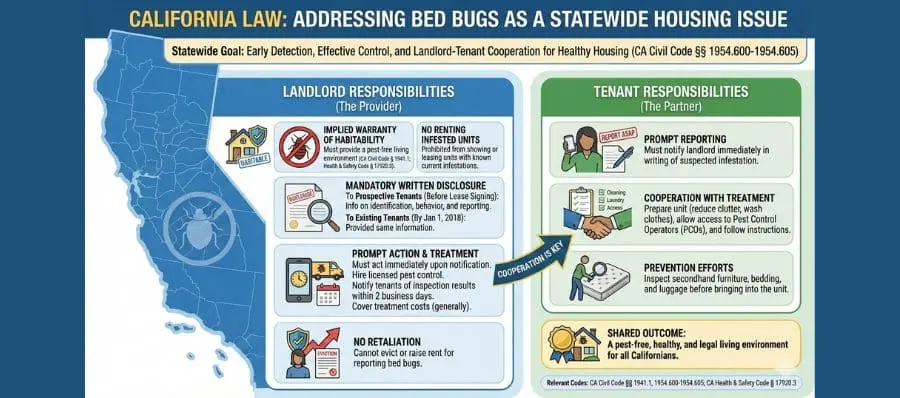
Bed bugs have moved from an occasional nuisance to a recurring legal concern across California. As infestations appear in apartments, hotels, and public accommodations, state law increasingly shapes how these situations are handled. Understanding the legal framework helps you see how housing standards, public health rules, and consumer protections intersect when bed bugs spread.
How California Law Defines a Bed Bug Problem
California treats bed bug infestations as a housing condition tied to basic habitability standards. Under state law, a rental unit must be fit for human occupancy, and active infestations can violate that requirement, which is why disputes sometimes involve a bed bugs attorney in California when responsibilities are contested.
The legal focus is on whether the infestation affects health and safety, rather than on inconvenience alone. Courts and enforcement agencies look at the presence of live insects, evidence of ongoing spread, and the landlord’s response once notified.
Disclosure and Notice Requirements
State statutes require landlords to provide written information about bed bugs to new tenants. This notice explains how infestations spread, what signs to look for, and the importance of prompt reporting.
If an infestation is identified, landlords must also give notice to affected tenants and neighboring units when treatment may impact access. These disclosure rules aim to limit the spread and reduce disputes over who knew what and when.
Landlord Duties Under Habitability Laws
California Civil Code section 1941.1 lists conditions that make a unit legally habitable, which include freedom from pest infestations. When bed bugs are present, landlords generally must arrange inspection and treatment within a reasonable time.
There are exceptions when a tenant’s conduct caused or worsened the problem, such as bringing infested furniture into the unit. Even then, landlords often remain responsible for coordinating treatment to protect other residents.
Tenant Responsibilities and Limitations
Tenants have specific legal responsibilities once bed bugs are discovered in a rental unit. California law expects tenants to notify the landlord as soon as signs of an infestation appear and to provide access for inspection and treatment. Prompt communication is important because delays can allow the infestation to spread to other units and common areas.
State law also permits landlords to require reasonable preparation measures before treatment, such as washing and bagging clothing, cleaning bedding, or reducing clutter that interferes with extermination. Tenants are generally required to follow these instructions so long as they are clearly communicated and do not place unreasonable burdens on the tenant. When a tenant refuses access, ignores preparation requirements, or interferes with treatment, their ability to seek rent reductions or other legal remedies may be limited under habitability laws.
Enforcement and Public Health Oversight
Local health departments play a role when infestations affect multiple units or public spaces. While bed bugs do not spread disease, health officials may issue orders related to sanitation and treatment in severe cases.
Cities and counties can adopt additional rules that supplement state law. These local measures often address inspection authority, timelines for treatment, and coordination in multi-unit buildings.
Legal Disputes and Available Remedies
Disagreements over responsibility, timing, or relocation costs can lead to legal claims. Tenants may seek rent reductions or repairs, while landlords may pursue compliance through notices or court orders.
California courts tend to examine documentation, inspection reports, and communication records. Outcomes often depend on how quickly each side acts after the infestation is discovered.
Why Bed Bugs Matter Beyond Individual Homes
Bed bug regulation reflects a broader concern about shared living environments, especially in multi-unit housing where residents live in close physical proximity. In apartment buildings, condominiums, hotels, and other dense settings, infestations can move through walls, shared utilities, and common areas, making containment within a single unit difficult. This interconnectedness means that one unresolved infestation can quickly affect neighboring units and, in some cases, an entire building.
Statewide rules help address this risk by creating consistent expectations across jurisdictions for prevention, disclosure, and response. Uniform standards reduce confusion about responsibilities when infestations cross unit boundaries or involve multiple parties. By providing a common legal baseline, these rules support earlier intervention and clearer resolution of disputes before they escalate into larger, building-wide or community-wide problems.
Understanding the Bigger Legal Picture
Bed bugs illustrate how routine housing issues can activate statewide legal standards that reach beyond individual apartments or buildings. In California, infestations are addressed through a combined framework of habitability law, disclosure requirements, and public health oversight, all designed to manage risks in shared living environments. This structure reflects the reality that bed bugs spread easily and can affect multiple households if not handled promptly and consistently. When you understand how these rules operate together, you are better equipped to evaluate your rights and obligations if an infestation occurs. Early awareness encourages timely reporting, cooperation, and compliance with treatment requirements. That shared understanding can reduce disputes, limit the spread of infestations, and prevent relatively small problems from escalating into broader legal conflicts.