
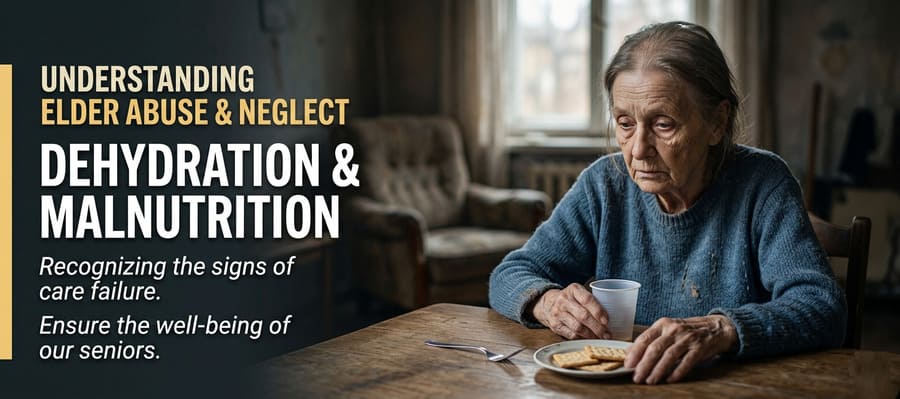
Dehydration and malnutrition two of the most serious preventable conditions affecting elderly residents of nursing homes. When nursing homes fail to promptly identify and address malnutrition and dehydration, they can result in life-threatening complications, including infections and organ failure. Residents who are physically frail, cognitively impaired, or unable to communicate their needs are at the greatest risk.
Let’s define these terms a little more closely.
Malnutrition
Malnutrition arises when the body doesn’t receive enough essential proteins, vitamins, and minerals. This can be caused by poor food quality, inadequate intake of food, or medical conditions that interfere with digestion and/or nutrient absorption. Like dehydration, malnutrition can exacerbate existing medical issues or lead to new health problems, including muscle wasting, pressure ulcers, and compromised immune function.
Dehydration
Dehydration describes when the body loses more fluids than it takes in, impairing normal bodily functions. Early symptoms may include dry mouth, fatigue, or dizziness. Severe cases can cause confusion, rapid heart rate, and organ dysfunction. In nursing homes and other skilled nursing facilities, dehydration often results from inadequate monitoring of fluid intake, failure to assist residents with drinking, or medication side effects.
When Do These Conditions Constitute Elder Abuse or Neglect?
Dehydration and malnutrition are indicators of substandard care. If staff fail to properly monitor or support a resident’s nutritional requirements, such failures-of-duty may rise to the level of legally actionable neglect.
In California, under the Elder Abuse and Dependent Adult Civil Protection Act, neglect is explicitly defined to include the “failure to prevent malnutrition or dehydration.” A California elder abuse law firm specializing in nursing home neglect can determine whether a specific situation meets the legal standard for a claim.
Which Residents Are Most at Risk?
Many nursing home residents rely entirely on staff for their daily nutritional and hydration needs. Certain groups face heightened risk due to physical, cognitive, or medical challenges, making increased oversight essential. Identifying these vulnerable populations is key to effective prevention and intervention:
- Residents with Cognitive Impairments: Those with Alzheimer’s disease or other forms of dementia may forget to eat or drink, be unable to recognize hunger or thirst, or have difficulty communicating their needs. Some may also resist assistance during meals, placing them at heightened risk.
- Residents with Physical Disabilities or Limited Mobility: Bedridden or immobile residents frequently depend on staff for help with eating and drinking. When staffing levels are insufficient or assistance is delayed, dehydration and malnutrition can occur quickly.
- Residents with Chronic Medical Conditions: Diseases such as diabetes, kidney disorders, and gastrointestinal illnesses often require carefully managed diets and fluid intake. Without proper oversight, these residents face increased risks of complications, including electrolyte imbalances and blood sugar instability.
- Residents with Swallowing Disorders (Dysphagia): Those who struggle with swallowing may limit food or fluid intake to avoid choking or aspiration. Although modified diets—such as pureed foods or thickened liquids—can help reduce risk, they may not fully meet nutritional and hydration needs.
- Residents Taking Certain Medications: Medications including diuretics, laxatives, and some psychiatric drugs can contribute to fluid loss, reduced appetite, or dry mouth. Residents prescribed multiple medications require consistent monitoring to ensure adequate nutrition and hydration.
- Elderly Residents Overall: As people age, natural thirst and hunger cues often decline. Combined with mobility limitations, chronic health conditions, and medication side effects, this makes older adults especially vulnerable to inadequate nutrition and hydration. Age-related muscle loss and metabolic changes can further intensify the effects of poor intake.
Although dehydration and malnutrition remain serious concerns in California nursing homes, facilities can implement effective prevention and intervention strategies. We will explore these approaches in next week’s blog.
If your loved one has suffered from dehydration or malnutrition in a California nursing home, an elder abuse law firm specializing in nursing home neglect can assess whether you have grounds for an elder abuse lawsuit. Talk to a Los Angeles elder neglect attorney to understand your legal position.


