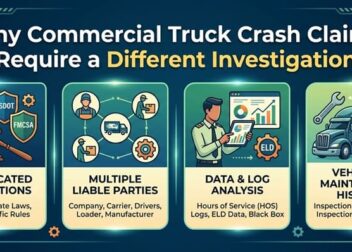

Beyond the Police Report: Evidence That Can Explain a Commercial Truck Crash
The visible damage after a commercial truck collision tells only part of the story. A police report may describe the location of the vehicles, identify the drivers, and summarize statements made at the scene. It may not explain whether the truck driver had exceeded safe working hours, whether the carrier knew about a mechanical problem, or whether the cargo had been loaded incorrectly.
For someone injured in a commercial vehicle collision, consulting a truck accident lawyer in San Antonio may help clarify which records could be relevant and which companies may possess them. Because commercial transportation involves drivers, carriers, vehicle owners, maintenance providers, and shipping businesses, the investigation may extend well beyond the accident scene.
This article provides general information about evidence in truck accident cases. It is not legal advice, and the significance of any record depends on the circumstances of the collision.
Why the Police Report May Not Tell the Whole Story
A police report is often one of the first documents reviewed after a crash. It can contain useful information, including driver identities, insurance details, witness names, reported injuries, citations, and an initial diagram of the accident.
However, the responding officer usually arrives after the collision. Unless the officer directly witnessed the event, the report may rely on statements from the people involved and observations made after the vehicles have stopped.
The report may not include information stored in the truck’s electronic systems or records maintained at the trucking company’s office. It may also be completed before a mechanical inspection, a detailed witness interview, or a review of the driver’s work history.
For these reasons, an investigation may compare the police report with physical, electronic, medical, and business records.
Electronic Data From the Truck
Modern commercial trucks may contain systems that record information about the vehicle’s operation. The type and amount of available data depend on the truck, its equipment, and how the company manages its fleet.
Electronic information may help investigators examine:
- Vehicle speed before impact
- Brake application
- Engine activity
- Sudden changes in speed
- Steering or stability events
- Seat belt use
- The timing of a collision-related event
- Fault codes or mechanical warnings
This information is sometimes informally described as “black box” data, although commercial vehicles can contain several separate systems rather than one single recording device.
Electronic data does not automatically prove why an accident happened. It must be interpreted alongside roadway evidence, vehicle damage, witness statements, and other records. For example, data showing sudden braking may establish when the driver reacted, but it may not explain what caused the driver to react at that moment.
Electronic Logging Device Records
Commercial driving schedules may be documented through an electronic logging device. These records can provide information about driving time, on-duty periods, rest periods, and changes in the driver’s work status.
Logs may become relevant when fatigue is considered as a possible factor. Investigators may compare the electronic record with:
- Fuel receipts
- Toll transactions
- Delivery records
- GPS information
- Dispatch messages
- Inspection reports
- Bills of lading
- Mobile phone activity
Differences between these records may raise questions about whether the driver’s schedule was accurately documented.
Fatigue cannot always be identified through a single record. A driver may technically remain within a permitted schedule and still be tired because of poor sleep, illness, demanding working conditions, or other factors. The full work pattern and surrounding circumstances may need to be reviewed.
GPS, Telematics, and Fleet Tracking Information
Many trucking companies use fleet-management systems to track vehicles, routes, fuel use, delivery times, and driver performance. These systems may create a detailed timeline of the truck’s movements.
Fleet data can sometimes show:
- The route followed before the collision
- Stops made during the trip
- Vehicle location at specific times
- Speed patterns
- Sudden acceleration or braking
- Departure and arrival times
- Delays in the delivery schedule
This information may help determine whether a driver was under schedule pressure or departed from the assigned route. It may also be compared with statements made after the accident.
Not every carrier uses the same technology, and retention periods may differ. Some information may be stored by an outside technology provider rather than directly by the trucking company.
Driver Qualification and Employment Records
The truck driver’s actions are an important part of the investigation, but the carrier’s hiring and supervision practices may also require review.
A driver qualification file may contain records related to the driver’s experience, licensing, training, employment history, and safety background. Depending on the circumstances, investigators may ask whether the company followed its hiring process and responded appropriately to earlier concerns.
Relevant records can include:
- Commercial driver’s license information
- Employment applications
- Previous employer inquiries
- Training certificates
- Driving history
- Road-test records
- Performance reviews
- Disciplinary records
- Prior incident reports
The existence of a previous violation does not prove that it caused a later collision. Its significance depends on whether it involved similar conduct and whether the employer knew or should have known about a safety concern.
Maintenance and Inspection Records
Mechanical failures can contribute to serious commercial vehicle accidents. Brakes, tires, steering components, lights, coupling devices, and trailer equipment are placed under substantial strain during regular operation.
Maintenance documentation may help answer several questions:
- When was the truck last inspected?
- Were any defects reported?
- Who performed the repairs?
- Was the truck returned to service before work was complete?
- Did the driver report a warning light or handling problem?
- Had the same component failed previously?
Records may include daily inspection reports, service invoices, work orders, parts receipts, and communications between drivers and maintenance personnel.
A damaged part should not be assumed defective or poorly maintained simply because it failed during a collision. The impact itself may have caused the damage. Technical inspection may be necessary to distinguish between a preexisting problem and damage resulting from the crash.
Cargo and Loading Documents
The way cargo is loaded can affect a truck’s balance, braking, and handling. A shifting or uneven load may contribute to a rollover, jackknife, loss of control, or difficulty stopping.
Cargo-related evidence can include:
- Bills of lading
- Weight tickets
- Loading instructions
- Securement checklists
- Warehouse records
- Photographs of the load
- Seal information
- Delivery documents
These records can help identify which company loaded the trailer and whether the driver had an opportunity or responsibility to inspect the cargo.
The business shipping the goods may not be the same company operating the truck. A separate warehouse, freight broker, or loading contractor may also be involved. Understanding these relationships can be important when improper loading is suspected.
Dispatch Messages and Internal Communications
Communications between the driver and the trucking company may provide context that is not visible in the physical evidence. Dispatch systems can record instructions about routes, deadlines, delays, vehicle problems, and delivery priorities.
Messages may show that a driver reported fatigue, requested additional time, or notified the company about a mechanical concern. They may also show whether the carrier responded to the report.
Other communications could involve:
- Text messages
- Emails
- In-cab messaging systems
- Phone records
- Maintenance requests
- Delivery scheduling platforms
- Internal safety reports
A single message should be interpreted in context. A short instruction may have a different meaning when viewed alongside the complete conversation and the company’s operating procedures.
Video From the Truck and Surrounding Area
Video can be particularly useful when drivers disagree about how the collision occurred. Some commercial vehicles use forward-facing or driver-facing cameras. Nearby businesses, homes, traffic systems, and other vehicles may also have recorded the event.
Possible sources include:
- Truck dash cameras
- Passenger vehicle dash cameras
- Business surveillance systems
- Residential doorbell cameras
- Parking lot cameras
- Traffic monitoring systems
- Cameras on public transportation vehicles
Video may show lane positions, traffic signals, visibility, vehicle speed, or the actions of surrounding drivers. Even footage that does not capture the impact may document the truck’s movements shortly before or after the crash.
Many systems overwrite recordings after a limited period. Identifying possible camera locations early can improve the chance that relevant footage remains available.
Mobile Phone and Distraction Evidence
Driver distraction can involve more than sending a text message. Phone calls, navigation applications, messaging platforms, dispatch devices, and other in-cab technology may take a driver’s attention away from traffic.
Phone records may indicate that a call or data connection occurred near the time of the accident. However, a record showing activity does not necessarily establish who was using the device or whether the activity caused the collision.
Investigators may compare phone information with vehicle data, video, witness observations, and the timing of the crash. The purpose is to build a reliable timeline rather than draw conclusions from one record alone.
Physical Evidence From the Roadway and Vehicles
Electronic and business records do not replace traditional accident evidence. Vehicle damage and roadway markings may help confirm or challenge the information found in company files.
Physical evidence may include:
- Tire marks
- Gouges in the pavement
- Debris patterns
- Fluid trails
- Final vehicle positions
- Guardrail or barrier damage
- Damage to the tractor and trailer
- Damage to surrounding vehicles
Measurements and photographs can help reconstruct the direction and movement of the vehicles. In complex cases, specialists may use this information with electronic data to evaluate speed, braking, visibility, and impact forces.
Repairs, salvage, weather, and continued traffic can change physical evidence. Detailed documentation before vehicles or components are altered may therefore be important.
Medical Records Help Document the Human Impact
Evidence about the cause of the crash is only one part of an injury claim. Medical records help document what happened to the people involved.
These records may show:
- When symptoms were first reported
- The type of injury diagnosed
- Tests and imaging performed
- Treatment provided
- Work restrictions
- Referrals to specialists
- Rehabilitation progress
- Expected future care
Medical documentation may also help distinguish new injuries from preexisting medical conditions. A previous condition does not automatically prevent an injury claim, but the medical history may require careful review to understand what changed after the collision.
Accurate descriptions are generally more useful than exaggerated or minimized symptoms. Consistent medical records can provide a clearer account of how the injuries developed and affected daily life.
Why Evidence Preservation Can Matter
Some truck-related records are retained only for specific periods, while electronic systems may continually overwrite older information. Vehicles can also be repaired, sold, or returned to service.
Preserving evidence does not determine who is responsible. It ensures that potentially relevant information remains available for review.
The appropriate steps depend on the case and may involve notifying a carrier, insurer, maintenance company, cargo business, or technology provider that certain records and physical items should be retained.
Waiting too long can make a complete investigation more difficult, particularly when information is controlled by several separate businesses.
Building a Complete Account of the Collision
A commercial truck accident is rarely explained by one document. The police report may identify the basic circumstances, while electronic data explains vehicle movement, employment records provide driver history, and maintenance files reveal the condition of the equipment.
These sources must be compared rather than reviewed in isolation. A log may appear accurate until it is compared with GPS data. A driver’s statement may change meaning when video becomes available. A mechanical failure may appear unexpected until earlier repair requests are found.
Ried Pecina Trial Lawyers examines serious vehicle collision claims by reviewing the broader record surrounding the event. Attorneys Arthur S. Ried and Juan R. Pecina represent injured clients in Texas, including people affected by commercial truck accidents.
A detailed investigation cannot guarantee a particular outcome. It can, however, help separate assumptions from documented facts and provide a clearer understanding of how a collision occurred, which parties were involved, and which insurance policies may need to be considered.