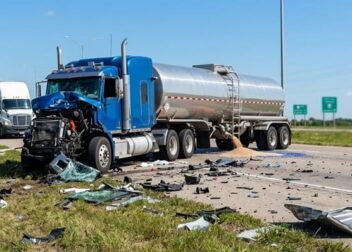
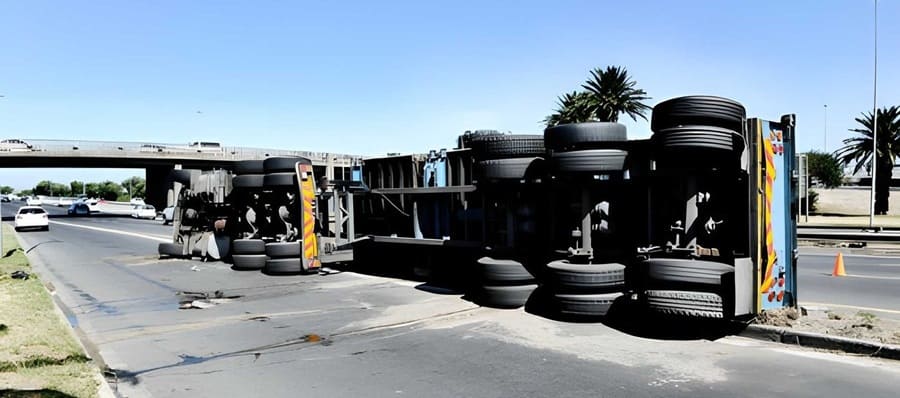
Sharing the road with commercial vehicles is an everyday reality for drivers, but establishing who is responsible for a trucking accident is rarely a straightforward process. When a massive semi-truck or 18-wheeler collides with a standard passenger car, the structural mismatch results in catastrophic property damage and severe injuries. While a typical fender-bender involves a clear line of fault between two drivers, commercial collisions unlock a web of shifting liabilities that spans across multiple corporate and individual entities.
Determining liability is an intricate legal puzzle because a single commercial delivery involves a network of independent contractors, multi-state carriers, and freight companies. If you or a loved one is dealing with the overwhelming aftermath of a crash, reviewing a comprehensive car accident checklist can provide immediate clarity on protecting your rights at the scene. Let’s break down exactly who can be held legally accountable when a commercial truck causes harm on our highways.
160,000+ According to federal safety data, more than 160,000 large truck accidents occur on U.S. roads annually, resulting in thousands of fatalities and tens of thousands of serious injuries, heavily impacting occupants of smaller passenger vehicles.
The Truck Driver: Human Error on the Front Lines
Truck drivers are held legally responsible when their personal negligence or direct traffic violations cause a collision. While they are trained professionals, truck drivers face tight deadlines and grueling schedules that can lead to dangerous shortcuts behind the wheel.
When investigating a driver’s personal liability, legal professionals typically look for specific violations of the Federal Motor Carrier Safety Administration (FMCSA) guidelines. Common examples of driver negligence include:
- Driving under severe fatigue: Violating Hours of Service (HOS) logs designed to ensure proper rest breaks.
- Distracted driving: Checking mobile dispatch systems, texting, or using navigation systems while in motion.
- Substance abuse: Operating a heavy vehicle under the influence of prescription medication, illicit drugs, or alcohol.
- Aggressive driving: Speeding to meet delivery windows, tailgating, or making unsafe lane changes without checking blind spots.
“The physical momentum of an 80,000-pound semi-truck means that even a split-second distraction by the operator can alter lives permanently. When a driver ignores basic safety protocols, they bear immediate responsibility.”
The Trucking Company: Corporate Accountability and Oversight
Trucking companies are legally responsible for the actions of their employed drivers and the general upkeep of their fleet. Under a legal principle known as respondeat superior, an employer can be held vicariously liable for injuries caused by an employee who was acting within the scope of their employment at the time of the crash.
Beyond vicarious liability, a motor carrier can be sued directly for its own negligent corporate practices. These companies are heavily regulated and must maintain strict compliance to keep the public safe. Corporate negligence often manifests in the following ways:
1. Negligent Hiring Practices
Trucking companies must thoroughly vet applicants by checking driving records, criminal backgrounds, and medical certifications. Hiring an operator with a known history of reckless driving or substance abuse opens the company up to direct liability.
2. Inadequate Training and Supervision
Failing to properly train drivers on specialized equipment or failing to monitor their digital logs can make the company liable. If a company turns a blind eye to a driver who consistently exceeds their legal driving hours, the company shares the blame.
3. Forcing Unrealistic Schedules
When a carrier establishes delivery deadlines that can only be met by violating federal speed limits or rest-break mandates, the company creates a culture of danger that makes them legally culpable for resulting collisions.
Cargo Loaders and Shipping Entities: The Hidden Danger
Shipping companies and third-party cargo loaders are held responsible when improperly secured or shifted freight causes a truck to become uncontrollable. Loading a massive trailer requires precise weight distribution to prevent shifting during transit.
If a load is poorly balanced, it can cause a semi-truck to jackknife or roll over during a standard highway turn. Freight loaders must adhere to strict weight limits; overloading a trailer puts immense strain on the vehicle’s braking system, significantly increasing stopping distances and leading to rear-end collisions.
Maintenance Teams and Equipment Manufacturers: Mechanical Failures
Third-party maintenance providers and parts manufacturers are held responsible when a mechanical defect or failed repair directly causes an accident. Commercial trucks log tens of thousands of miles every month, meaning parts wear down rapidly and require continuous oversight.
When a crash is triggered by a sudden system failure, liability may shift to these external entities:
- Independent Mechanics: If a third-party garage signs off on a brake inspection but fails to repair worn pads, they can be held liable for a subsequent brake failure.
- Parts Manufacturers: If a critical component, such as a tire or a steering column, contains a manufacturing defect that causes it to fail prematurely, the manufacturer can be sued under product liability laws.
Key Fact: The “Large Truck Crash Causation Study” conducted by federal agencies revealed that pre-crash brake failure was a factor in nearly 30% of all analyzed commercial vehicle accidents, highlighting the critical role of maintenance.
Navigating Your Next Steps Successfully
Determining liability after a commercial truck accident requires a swift, methodical investigation utilizing specialized evidence. Because multiple parties will immediately attempt to minimize their financial exposure, protecting your rights means acting quickly to preserve evidence before it is legally destroyed or lost.
If you find yourself navigating this challenging situation, focus on these critical actions:
- Secure the Electronic Logging Data: Modern trucks carry “black boxes” (Electronic Control Modules) that record speed, braking intervals, and hours of continuous operation right before an impact.
- Request Maintenance Records: Obtain the vehicle’s service logs to see if known mechanical issues were ignored by the fleet operators.
- Consult a Dedicated Professional: Partnering with a legal expert who understands complex federal trucking regulations ensures that every responsible corporate entity is identified and held accountable.
Understanding your options is the first step toward recovery. By identifying every negligent party, you ensure that the financial, physical, and emotional burdens of the accident are carried by those truly at fault.